
Introduction to Jan Suraksha Yojana
Jan Suraksha Yojana is an important social security initiative launched by the Government of India to provide affordable insurance and pension benefits to citizens, particularly people from economically weaker sections and low-income families. The main objective of this initiative is to make financial protection accessible to ordinary people through simple enrolment procedures and low-cost contributions. Many individuals in India do not have access to private insurance policies or retirement savings plans because of financial difficulties. Jan Suraksha schemes help address this problem by offering affordable financial security against unexpected events and old-age financial needs.
The Pradhan Mantri Jan Suraksha Yojana (PMJSY) framework primarily includes three important government-backed schemes: Pradhan Mantri Jeevan Jyoti Bima Yojana (PMJJBY), Pradhan Mantri Suraksha Bima Yojana (PMSBY), and Atal Pension Yojana (APY). These schemes provide life insurance, accidental insurance, and pension support to eligible citizens. Through participating banks and other authorised financial institutions, people can enrol in these schemes and receive financial protection.
Objectives of Jan Suraksha Yojana
The primary objective of Jan Suraksha Yojana is to improve financial inclusion and provide social security to people who may not have sufficient savings or insurance coverage. The government aims to ensure that financial protection is not limited to wealthy individuals or people working in organised sectors. By introducing affordable insurance and pension schemes, the initiative encourages families to prepare for unexpected financial situations and future retirement needs.
Related Posts
Another important objective is to increase awareness about financial planning among rural and urban populations. Many families depend on a single earning member, and the sudden loss of that income can create serious financial difficulties. Jan Suraksha schemes provide an additional layer of financial protection and encourage individuals to use formal banking services.
Three Major Schemes Under Jan Suraksha Yojana
Jan Suraksha includes three major social security schemes, each designed to address a different financial requirement.
-
Pradhan Mantri Jeevan Jyoti Bima Yojana (PMJJBY): Provides life insurance coverage in case of the insured person’s death due to any cause, subject to policy conditions.
-
Pradhan Mantri Suraksha Bima Yojana (PMSBY): Provides insurance coverage for accidental death and specified accidental disabilities.
-
Atal Pension Yojana (APY): Provides a guaranteed monthly pension after the age of 60 to eligible subscribers, depending on their selected contribution level and scheme conditions.
These three schemes offer different forms of financial protection and help individuals plan for various stages of life.
Pradhan Mantri Jeevan Jyoti Bima Yojana (PMJJBY)
Pradhan Mantri Jeevan Jyoti Bima Yojana is a government-supported life insurance scheme designed to provide financial assistance to a subscriber’s family in the event of the subscriber’s death. It is available to eligible individuals between 18 and 50 years of age at the time of initial enrolment. The scheme provides life insurance coverage of ₹2 lakh, subject to applicable terms and conditions.
The annual premium is ₹436, which is generally collected automatically from the subscriber’s linked bank or post office account through an auto-debit facility. This affordable premium makes the scheme accessible to individuals with limited income. The coverage is generally renewable every year, subject to eligibility and payment of the required premium. PMJJBY is particularly useful for families that depend on one earning member because it can provide financial support to nominees after the insured person’s death.
Pradhan Mantri Suraksha Bima Yojana (PMSBY)
Pradhan Mantri Suraksha Bima Yojana is an affordable accident insurance scheme introduced to provide financial protection against accidental death and specified disabilities. Individuals between 18 and 70 years of age who have an eligible savings bank or post office account can enrol in this scheme.
The annual premium is ₹20, which is automatically deducted from the subscriber’s linked account. Under the scheme, the insurance benefit is ₹2 lakh for accidental death or specified total permanent disability and ₹1 lakh for specified partial permanent disability, subject to the policy conditions. The scheme provides an affordable way for ordinary citizens to obtain accident insurance coverage without paying expensive premiums.
Atal Pension Yojana (APY)
Atal Pension Yojana is a government-backed pension scheme designed mainly for workers in the unorganised sector who may not have access to regular retirement benefits. Individuals between 18 and 40 years of age can join the scheme, provided they meet the applicable eligibility conditions. Subscribers contribute a fixed amount regularly until they reach 60 years of age.
After reaching 60 years, eligible subscribers receive a guaranteed monthly pension ranging from ₹1,000 to ₹5,000, depending on their selected pension option and contribution history. The required contribution depends on the subscriber’s joining age and chosen pension amount. APY helps people develop a retirement savings habit and provides financial support during old age. However, individuals who are or have been income-tax payers are not eligible to join APY under the rules applicable since October 1, 2022.
Eligibility Criteria for Jan Suraksha Yojana
The eligibility requirements vary depending on the scheme selected by the applicant. Generally, applicants must be Indian citizens with an eligible savings bank or post office account. They must provide consent for enrolment and authorise automatic deduction of the applicable premium or pension contribution from their account.
The age requirements are different for each scheme. PMJJBY is available to individuals aged 18 to 50 years at entry, while PMSBY is available to individuals aged 18 to 70 years. APY is available to eligible individuals aged 18 to 40 years who are not or have not been income-tax payers. Applicants should carefully check their eligibility before submitting an enrolment request.
Jan Suraksha Yojana Benefits
Jan Suraksha Yojana provides several financial benefits to individuals and their families. One of its major advantages is affordable insurance coverage, which helps people protect their families without paying high insurance premiums. PMJJBY provides financial assistance to the nominee in the event of the insured person’s death, while PMSBY offers protection against specified accidental death and disabilities.
APY provides long-term retirement security through a guaranteed monthly pension after the subscriber reaches 60 years of age. The selected pension continues to the spouse after the subscriber’s death, and the accumulated pension wealth is payable to the nominee after both the subscriber and spouse pass away, according to scheme rules.
Other important benefits include:
-
Affordable annual insurance premiums.
-
Financial protection for eligible families.
-
Accident-related insurance benefits.
-
Guaranteed pension under APY.
-
Convenient enrolment through banks and post offices.
-
Automatic premium or contribution deduction.
-
Greater financial inclusion for rural and urban citizens.
These benefits make Jan Suraksha an important initiative for people who want basic financial protection and retirement planning support.
Jan Suraksha Yojana Premium and Coverage Details
The premium and coverage amounts depend on the particular scheme. PMJJBY and PMSBY require affordable annual premiums, whereas APY requires regular contributions based on the subscriber’s age and selected pension amount.
The following table provides an overview of the three schemes:
| Scheme | Eligible Age | Premium / Contribution | Main Benefit |
|---|---|---|---|
| PMJJBY | 18–50 years at entry | ₹436 per year | ₹2 lakh life cover |
| PMSBY | 18–70 years | ₹20 per year | ₹2 lakh or ₹1 lakh accident cover, depending on disability |
| APY | 18–40 years | Based on age and pension choice | ₹1,000–₹5,000 monthly pension after 60 |
For PMJJBY and PMSBY, the annual premiums are generally collected through the linked savings account using the auto-debit facility. APY contributions can be paid monthly, quarterly or half-yearly. Applicants should check the latest scheme terms, premium requirements and contribution details with their participating bank or post office before enrolment.
Documents Required for Jan Suraksha Registration
Applicants should keep the necessary personal and banking details ready before applying for any Jan Suraksha scheme. The exact documentation requirements may vary depending on the selected scheme and the participating bank or post office. Generally, applicants should have an active savings bank or eligible post office account and provide the required enrolment consent.
Commonly required details include the applicant’s
- Aadhaar number or other accepted identity information
- mobile number
- bank account details
- nominee information
- date of birth and relevant declaration forms.
- For APY registration, applicants must also provide the information required to establish their eligibility and select the desired pension amount. Providing correct nominee details is particularly important because nominees or family members may need them when submitting insurance claims.
How to Apply for Jan Suraksha Yojana Online
Eligible individuals can apply for Jan Suraksha schemes through participating banks and authorised digital banking facilities. The online application process may differ depending on the bank, so applicants should use only official banking platforms.
The general registration process includes the following steps:
-
Visit your bank’s official website or open its mobile banking application.
-
Log in using your registered banking credentials.
-
Find the insurance or social security schemes section.
-
Select PMJJBY, PMSBY or APY according to your requirement.
-
Enter the requested personal and bank account information.
-
Provide nominee details and complete the required declarations.
-
Give consent for automatic premium or contribution deduction.
-
Submit the application and save the acknowledgement or confirmation.
After submission, the bank processes the enrolment request according to the applicable scheme rules. Applicants should check their account statements and confirmation messages to verify that the registration and first deduction have been completed successfully.
How to Apply for Jan Suraksha Yojana Offline
People who are not comfortable using online banking services can also apply through their nearest participating bank branch or post office. The offline application method is useful for rural residents, senior citizens and individuals who need assistance completing the enrolment process.
Applicants should visit their bank or post office and request the application form for the relevant Jan Suraksha scheme. They must fill in their personal details, account information, nominee details and other required information. After completing the form, applicants should submit it along with any supporting documents requested by the institution. The bank will verify the information and process the enrolment request. Applicants should keep the acknowledgement or application reference details for future use.
Jan Suraksha Yojana Claim Settlement Process
The claim settlement process is an important part of Jan Suraksha because beneficiaries may need financial assistance after the death or disability of an insured person. For PMJJBY, the nominee or eligible claimant must inform the participating bank or post office about the insured person’s death and submit the prescribed claim form with the required supporting documents.
For PMSBY, the claimant must submit the appropriate documents relating to accidental death or disability. These may include a death certificate, hospital records, disability certificate, police records or other documents depending on the nature of the accident and claim. The bank forwards the claim to the associated insurance company for verification and settlement.
Under APY, pension payments begin when the subscriber reaches 60 years of age. The spouse and nominee are entitled to the applicable benefits according to the scheme provisions. Beneficiaries should contact the bank or relevant financial institution for assistance with claim forms and settlement procedures.
Important Points to Remember Before Registration
Before enrolling in Jan Suraksha Yojana, applicants should understand the scheme conditions and maintain sufficient funds in their bank accounts for automatic deductions. If the account does not have the required balance, the insurance coverage or pension contribution may be affected according to the applicable rules.
Applicants should also provide accurate personal information, maintain updated nominee details and check their enrolment status regularly. PMJJBY and PMSBY are renewable annually, so individuals should ensure that their accounts have sufficient funds when the renewal premium is due. APY subscribers should maintain regular contributions to receive the selected pension benefits.
It is also important to understand that life insurance, accident insurance and pension benefits have different conditions. People should read the official guidelines carefully instead of assuming that all three schemes provide identical coverage.
Official Jan Suraksha Portal
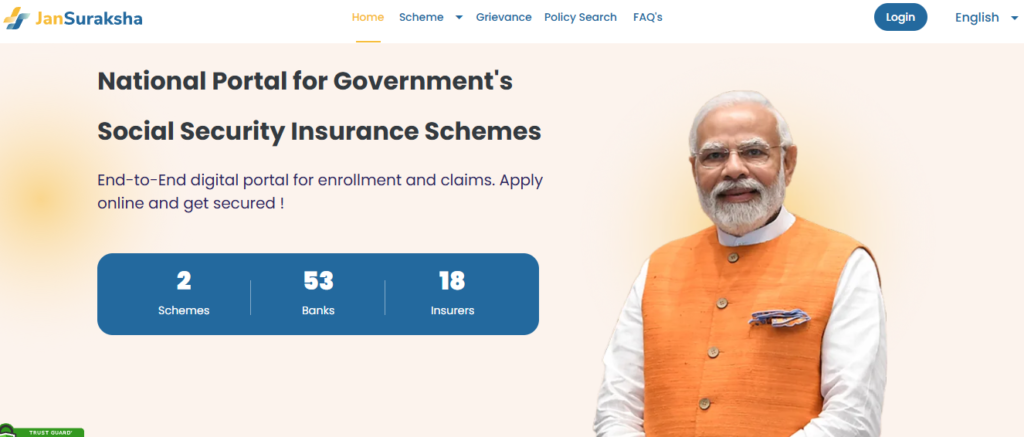
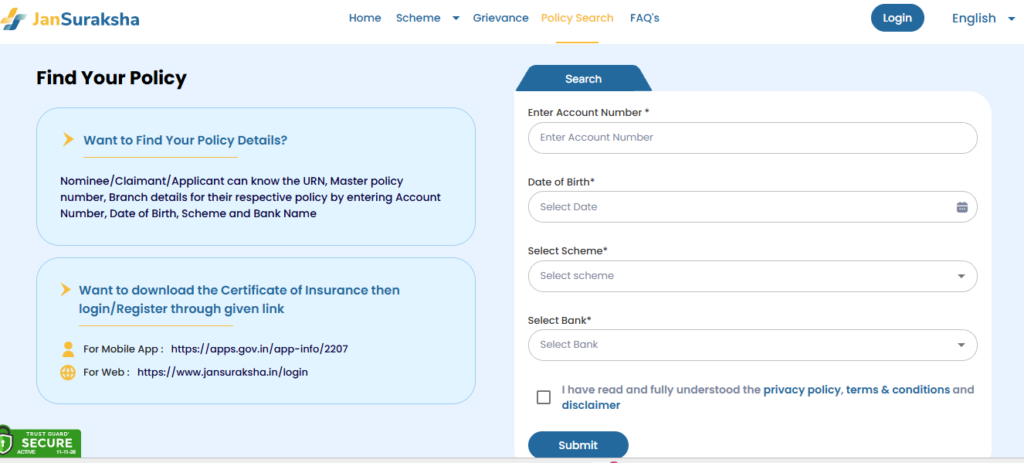
The Government of India provides an official information portal for Jan Suraksha schemes. Applicants can visit the portal to understand the scheme guidelines, eligibility requirements, application forms and other important information related to PMJJBY and PMSBY.
Official Website
Applicants can also approach their participating bank or post office for registration assistance, premium information and claim-related support. Always use official government or banking platforms when submitting personal and financial information.
Conclusion
Jan Suraksha Yojana is an important financial security initiative that helps Indian citizens access affordable life insurance, accident insurance and pension benefits. Through PMJJBY, PMSBY and APY, eligible individuals can obtain financial protection for their families and plan for their retirement. The schemes are particularly beneficial for low-income households, rural communities, self-employed individuals and workers in the unorganised sector.
The simple enrolment facilities through banks and post offices make these schemes accessible to a large section of the population. People who want to improve their financial security should understand the eligibility conditions, premium amounts and benefits before applying. By making proper use of Jan Suraksha schemes, eligible citizens can take an important step towards building a more financially secure future.