Tamil Nadu Solar Rooftop Scheme – Eligibility, Benefits, Subsidy, Application Process and Complete Details
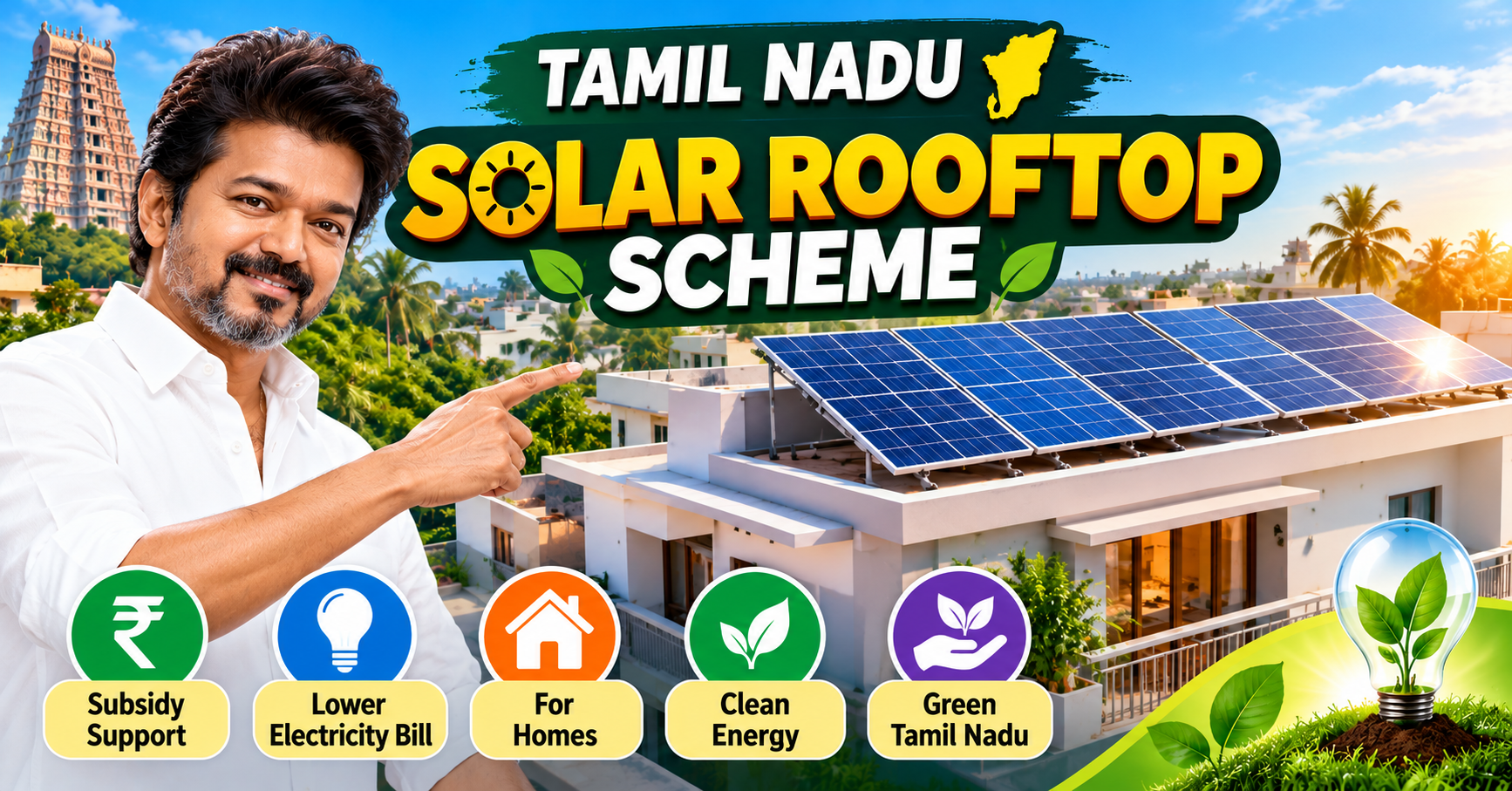
The Tamil Nadu Solar Rooftop Scheme is an important initiative that encourages households to generate their own electricity using solar energy. With increasing electricity consumption and rising energy requirements, rooftop solar systems provide an effective way for homeowners to reduce their monthly electricity bills while supporting clean and renewable energy. Through the Central Government’s PM Surya Ghar: Muft Bijli Yojana and related solar energy programmes, eligible residential electricity consumers in Tamil Nadu can install rooftop solar panels and receive government subsidies.
This scheme aims to make solar power affordable and accessible to ordinary families. By installing solar panels on their rooftops, households can generate electricity from sunlight, reduce their dependence on conventional power sources, and contribute to environmental protection. The programme also supports India’s long-term goal of increasing renewable energy production.
What Is the Tamil Nadu Solar Rooftop Scheme?
The Tamil Nadu Solar Rooftop Scheme refers to the adoption of rooftop solar power systems by residential electricity consumers in Tamil Nadu, supported by government incentives and renewable energy initiatives. The main national programme supporting residential installations is PM Surya Ghar: Muft Bijli Yojana, launched by the Government of India. Under this programme, eligible households can install grid-connected rooftop solar systems and receive Central Financial Assistance (CFA).
Related Posts
A rooftop solar system uses photovoltaic (PV) panels to convert sunlight into electrical energy. The electricity generated can be used to operate household appliances such as fans, lights, televisions, refrigerators, and washing machines. When the solar system produces more electricity than the household consumes, surplus power may be exported to the electricity grid according to applicable regulations. This makes rooftop solar an attractive option for families looking to reduce their electricity expenses.
Main Objectives of the Solar Rooftop Scheme
The primary objective of the scheme is to encourage residential households to adopt renewable energy and reduce their dependence on traditional electricity generation. Solar energy is naturally available and can be converted into usable electricity without burning fossil fuels. By promoting rooftop solar installations, the government aims to increase clean energy production at the household level.
Another important objective is to reduce monthly electricity expenses for families. Households that generate a significant portion of their electricity requirements through rooftop solar can reduce the amount of electricity they need to purchase from the grid. The scheme also promotes environmental protection, energy independence, and the development of India’s renewable energy sector.
Benefits of the Tamil Nadu Solar Rooftop Scheme
The scheme provides several benefits to residential electricity consumers. One of the biggest advantages is the opportunity to receive government financial assistance for installing rooftop solar panels. This reduces the initial investment required from eligible households and makes solar energy more affordable.
Another major benefit is the reduction in monthly electricity bills. Once installed, solar panels generate electricity using sunlight, which can be consumed directly by the household. Families may also benefit from lower dependence on conventional electricity supply, depending on their system capacity and consumption patterns.
Tamil Nadu receives substantial sunlight during much of the year, making solar energy a useful renewable energy option. In addition, rooftop solar installations can help reduce carbon emissions and encourage a cleaner environment. The system can also provide long-term financial benefits because solar panels generally operate for many years with appropriate maintenance.
Tamil Nadu Solar Rooftop Scheme Subsidy Details
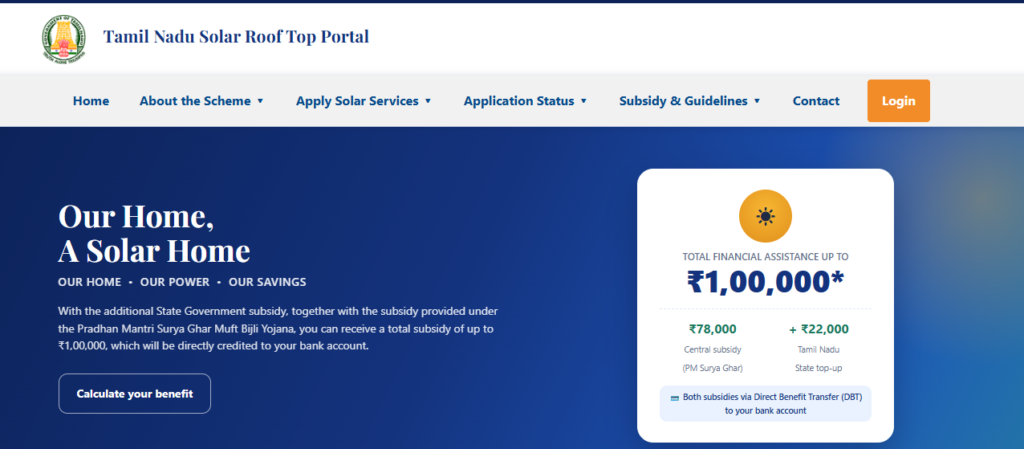
One of the most attractive features of the Tamil Nadu Solar Rooftop Scheme is the financial assistance provided by the Central and State Governments. Under the national PM Surya Ghar scheme, eligible residential households receive subsidies based on the installed solar system capacity. The Tamil Nadu Solar Homes Portal also displays an additional State Government subsidy, taking the maximum combined assistance to ₹1 lakh per household, subject to scheme conditions.
The subsidy structure currently displayed on the Tamil Nadu Solar Homes Portal is as follows:
| Solar system capacity | Central subsidy | Tamil Nadu subsidy | Total subsidy |
|---|---|---|---|
| 1 kW | ₹30,000 | ₹5,000 | ₹35,000 |
| 2 kW | ₹60,000 | ₹10,000 | ₹70,000 |
| 3 kW | ₹78,000 | ₹22,000 | ₹1,00,000 |
| Above 3 kW | ₹78,000 | ₹22,000 | ₹1,00,000 |
The Central Government subsidy is capped at ₹78,000 for general residential installations. The additional Tamil Nadu assistance is subject to the State Government’s eligibility requirements and verification process. Both amounts are intended to be transferred directly to the beneficiary’s bank account through Direct Benefit Transfer (DBT).
Eligibility Criteria for the Solar Rooftop Scheme
Residents who want to benefit from the Tamil Nadu Solar Rooftop Scheme must satisfy the applicable eligibility conditions. The scheme is primarily intended for domestic electricity consumers who want to install grid-connected rooftop solar systems at their residential properties. Applicants should have a valid residential electricity service connection and sufficient shadow-free rooftop space for installing solar panels.
The applicant must follow the registration and installation procedures prescribed under PM Surya Ghar and the Tamil Nadu State Solar programme. Solar panels and other equipment must meet the applicable technical requirements, including Domestic Content Requirement (DCR) and approved module-list conditions. Installation must be completed through an eligible and empanelled vendor. Applicants should also provide valid bank details and complete the required inspection and commissioning procedures. The additional Tamil Nadu subsidy may have further conditions, so applicants should check the latest official guidelines before making an investment.
Documents Required for Online Registration
Applicants should keep the necessary documents ready before starting the online registration process. Providing correct information helps prevent application delays and verification problems.
-
Aadhaar Card
-
Electricity Bill
-
Mobile Number
-
Email ID
-
Bank Passbook
-
Cancelled Cheque
-
Address Proof
-
Roof Ownership Proof
-
Passport Size Photograph
-
Electricity Service Connection Number
-
Consumer Account Number
-
Solar Panel Installation Photographs
-
Solar Equipment Details
-
DCR Certificate (Domestic Content Requirement)
A bank account in the applicant’s name with the required banking information is also important because the subsidy is transferred through DBT. Applicants may be asked to provide bank account details, a cancelled cheque or passbook information, and other documents required for verification. A photograph of the applicant and installation-related photographs or technical documents may also be required at different stages. The exact document requirements should be checked on the official application portal.
How to Apply for the Tamil Nadu Solar Rooftop Scheme Online
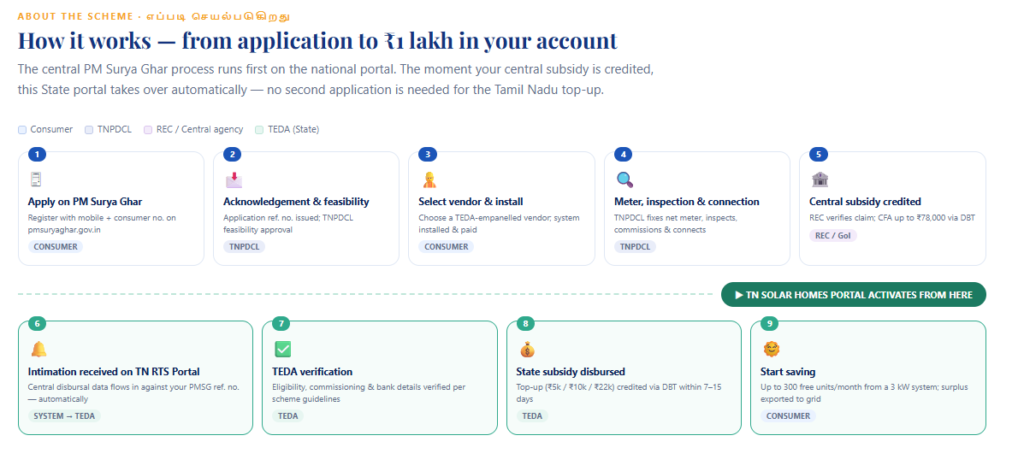
The application process is designed to allow eligible households to register online without repeatedly visiting government offices. Residential consumers must first complete their registration through the PM Surya Ghar National Portal. After registration, they can proceed with the Tamil Nadu electricity utility’s solar rooftop application process using the reference number generated on the national portal.
Applicants should carefully enter their electricity consumer number, registered mobile number, and other required details. Once the application is submitted, the electricity distribution company reviews the application and provides the necessary feasibility approval or acknowledgement. After receiving the required approval, applicants can select an eligible vendor and proceed with the installation.
The Tamil Nadu Solar Homes Portal explains that the State subsidy process is triggered automatically after the eligible Central subsidy is credited and the required information is received. Therefore, applicants should complete every required step correctly and monitor their application status.
Steps to Install Rooftop Solar Panels
Installing a rooftop solar system involves several important steps. First, the applicant should assess the available rooftop area, household electricity consumption, and suitable solar system capacity. A professional solar vendor can help determine the appropriate installation size based on electricity usage and roof conditions.
After the application receives the necessary approval, the selected vendor installs the solar panels, inverter, mounting structures, wiring, and other required components. The system must satisfy the technical and safety standards specified by the authorities. Once installation is complete, the required documents and readiness information are submitted for inspection.
The electricity distribution company then completes the applicable inspection, meter installation, and grid-connectivity procedures. After commissioning and verification, the Central subsidy application is processed. Eligible households can subsequently receive the additional Tamil Nadu State subsidy according to the applicable guidelines.
How Does a Rooftop Solar System Work?
A rooftop solar system uses photovoltaic panels to convert sunlight into direct current (DC) electricity. This electricity passes through an inverter, which converts DC electricity into alternating current (AC) electricity suitable for household appliances. The generated electricity can then be used to operate lights, fans, televisions, refrigerators, computers, and other electrical equipment.
In a grid-connected solar system, the household remains connected to the electricity distribution network. When solar generation is insufficient, electricity can be imported from the grid. When excess electricity is generated, it may be exported to the grid under the applicable billing arrangement. A suitable bidirectional meter records the electricity imported and exported. This arrangement helps households make better use of the electricity generated by their rooftop solar panels.
Electricity Bill Reduction Through Solar Energy
Reducing monthly electricity expenses is one of the main reasons households choose rooftop solar installations. When a solar system generates sufficient electricity during daylight hours, the household can use that electricity instead of purchasing the same amount from the conventional grid. This can reduce the electricity charges payable by the consumer.
The actual savings depend on the installed capacity, household consumption, sunlight availability, seasonal weather, system efficiency, and applicable electricity billing rules. Families that use more electricity during daytime hours may be able to consume a larger portion of their solar generation directly. However, solar installation does not automatically guarantee a zero electricity bill because fixed charges, applicable service charges, and electricity imported from the grid may still be payable.
Is 3 kW Solar Rooftop System Enough for a House?
A 3 kW rooftop solar system can be a suitable option for many residential households, depending on their monthly electricity consumption. Under favourable sunlight conditions, a 3 kW system can generate a useful amount of electricity for everyday household requirements. The actual generation varies depending on weather conditions, panel orientation, shading, and equipment performance.
A 3 kW system generally requires sufficient shadow-free rooftop space. Before installation, homeowners should consult an experienced solar vendor to calculate their electricity requirements and determine the appropriate system capacity. Choosing the correct capacity helps avoid unnecessary investment and improves the financial benefits of solar energy.
Maintenance and Lifespan of Solar Panels
Rooftop solar panels generally require less maintenance compared with many other electricity-generating systems. However, regular maintenance is important to ensure consistent electricity generation. Dust, bird droppings, leaves, and other materials can accumulate on the panel surface and reduce its efficiency. Cleaning the panels periodically according to the manufacturer’s recommendations can help maintain their performance.
Homeowners should also inspect the inverter, electrical connections, mounting structures, and safety equipment. Any unusual performance issues should be reported to the installation vendor. A properly installed and maintained rooftop solar power system can generally have an operational lifespan of around 25 years, although individual components may have different warranty and replacement periods.
Important Guidelines Before Installing Solar Panels
Before applying for the scheme, consumers should understand the important installation guidelines. Applicants should select vendors listed or empanelled under the applicable government programme and avoid making payments to unauthorised individuals. They should verify the equipment specifications, installation charges, warranty conditions, and maintenance services before signing an agreement.
It is also important to understand the electricity billing arrangement applicable to the connection. Tamil Nadu has specific regulations for grid-connected rooftop solar systems, including net feed-in provisions. Consumers should confirm the applicable rules, meter charges, and other requirements with the electricity distribution company. Installing a solar system without following the official approval and commissioning process may affect subsidy eligibility.
Official Portal for Tamil Nadu Solar Rooftop Scheme
The Tamil Nadu Government provides an online platform called the Tamil Nadu Solar Homes Portal to help residential consumers understand the scheme, calculate their potential subsidy, check eligible vendors, and access application-related information. The portal also explains the process through which the Central and State subsidies are provided.
Applicants can use the official government platforms to check the latest guidelines, application requirements, vendor information, and subsidy status. They should use only authorised government portals for registration and avoid unofficial websites requesting unnecessary personal or banking information.
Frequently Asked Questions (FAQs)
Who can apply for the Tamil Nadu Solar Rooftop Scheme?
Eligible residential electricity consumers in Tamil Nadu who satisfy the PM Surya Ghar and applicable State Government conditions can apply for rooftop solar installation assistance.
How much subsidy is available under the scheme?
The Central subsidy can reach ₹78,000 for a residential system of 3 kW or above. The Tamil Nadu Solar Homes Portal currently displays an additional State subsidy of up to ₹22,000, making the combined assistance up to ₹1 lakh, subject to eligibility.
Is online registration mandatory?
Yes. Applicants seeking the PM Surya Ghar subsidy must register through the National Portal and complete the required Tamil Nadu utility procedures.
Can tenants apply for the scheme?
Tenants may face additional requirements because rooftop installation generally requires permission from the property owner and a suitable eligible electricity connection. Applicants should verify their eligibility before registering.
Does the solar system provide electricity at night?
Solar panels do not generate electricity at night. Households can import electricity from the grid when solar generation is unavailable. Battery storage is another option, but its cost and scheme eligibility should be considered separately.
How can applicants check their application status?
Consumers can use the application-status facilities available through the official Tamil Nadu Unified Solar Rooftop Portal to check their application progress.
Website Link
Conclusion
The Tamil Nadu Solar Rooftop Scheme is a valuable opportunity for residential electricity consumers who want to reduce their electricity expenses and adopt renewable energy. With Central Government financial assistance of up to ₹78,000 and the additional Tamil Nadu State subsidy currently displayed on the official portal, eligible households may receive combined assistance of up to ₹1 lakh for rooftop solar installations.
The scheme encourages families to generate clean electricity, reduce dependence on conventional power sources, and contribute to a sustainable environment. Before applying, consumers should carefully understand the eligibility requirements, subsidy conditions, installation procedures, and electricity billing regulations. Choosing an authorised vendor and following the official application process can help households receive the available benefits successfully.