Vettri Thiran Payirchi Thittam – Complete Guide
Introduction to Vettri Thiran Payirchi Thittam
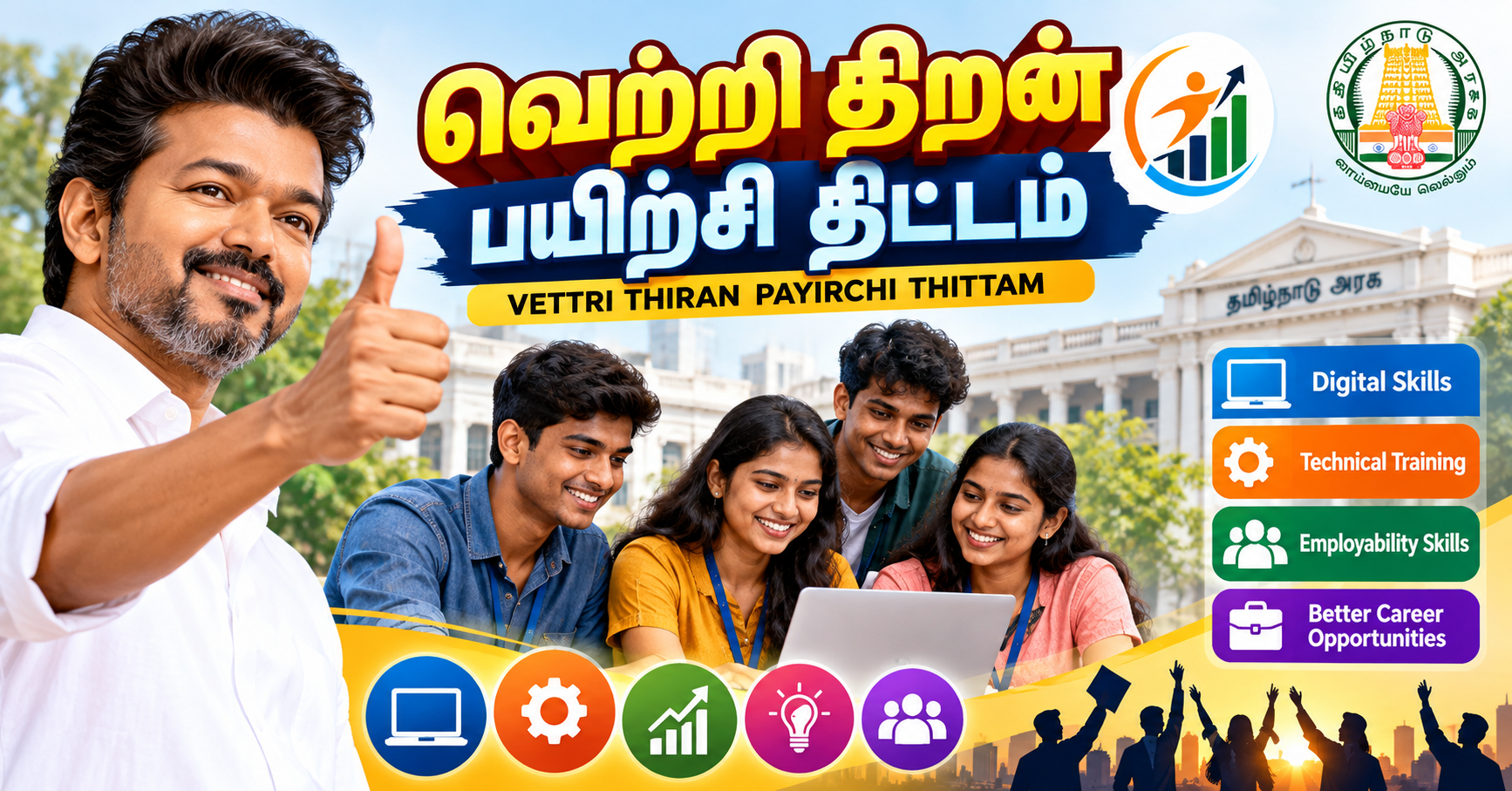
Vettri Thiran Payirchi Thittam is a skill development initiative focused on helping students and young people improve their practical, technical, and professional abilities. The main purpose of this programme is to provide training that can support students in developing skills beyond their regular academic education. In today’s competitive employment environment, educational qualifications alone may not always be sufficient. Employers often look for candidates who have practical knowledge, digital skills, communication abilities, and industry-oriented expertise. Through structured skill training, Vettri Thiran Payirchi Thittam aims to help young people become better prepared for employment and future career opportunities.
Main Objective of the Scheme
The primary objective of Vettri Thiran Payirchi Thittam is to improve the employability and skill levels of young people. The programme focuses on connecting education with practical employment requirements so that students can understand how their academic knowledge can be applied in real-world situations. Skill development can help learners gain confidence, improve their technical capabilities, and understand workplace expectations. The scheme also aims to encourage young people to continuously develop their knowledge and adapt to changing employment trends. By providing structured training opportunities, the programme can support students and unemployed youth in preparing themselves for different career pathways.
Who Can Benefit From Vettri Thiran Payirchi Thittam?
Vettri Thiran Payirchi Thittam is primarily aimed at college students and unemployed youth who want to improve their career-related skills. College students can use the programme to gain additional knowledge alongside their regular degree or diploma studies. Unemployed youth can use skill training to develop new abilities or strengthen existing skills while looking for suitable employment opportunities. The exact eligibility conditions may differ according to the particular training programme, course, qualification, or training provider. Therefore, applicants should always check the requirements of the specific course before applying.
Related Posts
Importance of Skill Development for Students
Skill development has become an important part of modern education because academic knowledge and workplace skills are often different. A student may have a degree but still need practical experience, technical knowledge, communication skills, or digital abilities to perform effectively in a professional environment. Vettri Thiran Payirchi Thittam can help bridge this gap by providing additional learning opportunities. Students can use these programmes to understand industry expectations, develop confidence, explore career options, and improve their overall professional profile before entering the job market.
Training Based on Industry Requirements
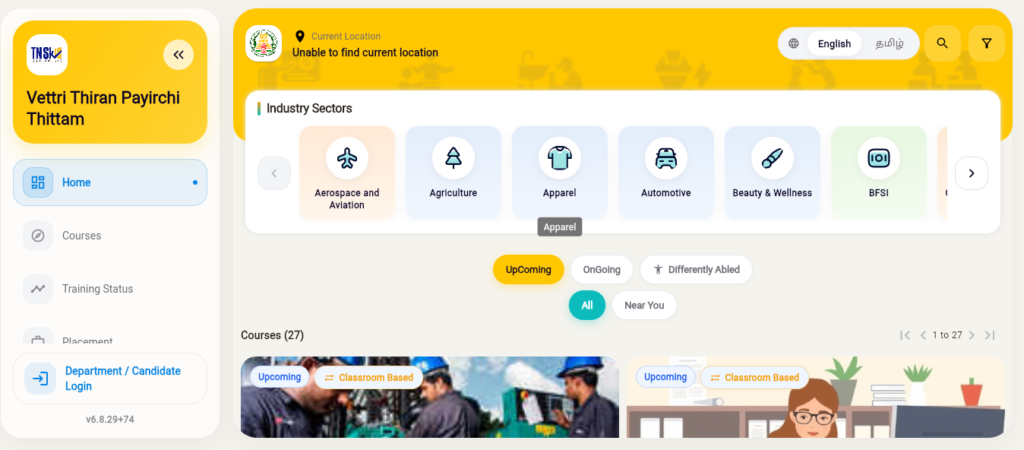
One of the important aspects of a skill-development programme is its focus on industry requirements. Technology and employment practices continue to change, creating demand for new types of knowledge and skills. Training programmes can help learners understand the latest developments in their selected fields and prepare for workplace responsibilities. Industry-oriented training may include technical concepts, practical activities, professional practices, digital tools, communication, safety procedures, and other job-related capabilities. This approach allows learners to focus not only on completing a course but also on developing skills that can be useful in their future careers.
Technical and Digital Skill Development
Digital technology has become an important part of almost every industry. As a result, students and young job seekers need to understand different digital tools and technology-based working methods. Skill-development programmes can provide opportunities to improve computer knowledge, digital literacy, software-related skills, data handling, online tools, and other technology-oriented abilities. Developing these skills can help young people become more comfortable with modern workplaces where digital systems are increasingly used for communication, documentation, operations, and professional activities.
Practical Learning Opportunities
Practical learning is an important part of effective skill development. Classroom-based education mainly provides theoretical knowledge, while practical training allows learners to understand how that knowledge can be used in real situations. Vettri Thiran Payirchi Thittam focuses on improving practical capabilities so that learners can gain greater exposure to workplace-oriented learning. Practical activities can help students understand processes, solve problems, use relevant tools, and develop confidence in performing tasks. This type of learning can complement their existing academic education and provide a more complete preparation for employment.
Internship and Workplace Exposure
Internship opportunities can give young people valuable exposure to professional environments. During an internship, learners can understand how organisations function, how teams communicate, how responsibilities are assigned, and how professional tasks are completed. Workplace exposure can also help students understand the difference between classroom learning and actual job responsibilities. For young people without previous work experience, an internship can provide an opportunity to become familiar with professional expectations and develop workplace discipline. The availability and conditions of internships depend on the specific programme and training structure.
Benefits for College Students
College students can benefit from Vettri Thiran Payirchi Thittam by gaining additional skills while continuing their formal education. Students can select training that complements their academic background or helps them explore a different career area. For example, a student studying a particular subject may use skill training to develop digital, technical, communication, management, or industry-specific abilities. Such additional training can strengthen a student’s overall professional profile and help them approach internships, interviews, and employment opportunities with greater preparation.
Benefits for Unemployed Youth
Unemployed youth can use skill-development programmes to improve their employment readiness. Individuals who have completed their education but are still searching for jobs may benefit from learning new skills that are relevant to current employment opportunities. Training can also help people who want to change their career direction or improve their existing qualifications. By developing practical and professional abilities, unemployed youth can potentially expand the range of jobs they are able to apply for. However, completing a training programme does not automatically guarantee employment, as job opportunities depend on individual qualifications, skills, experience, and employer requirements.
Career-Oriented Training
Career-oriented training helps learners select skills based on their future professional goals. Instead of choosing a course only because it is available, students can consider whether the training is connected to the type of career they want to pursue. Vettri Thiran Payirchi Thittam can support this approach by providing access to different types of skill-development opportunities. Learners should consider their interests, educational background, strengths, and long-term career plans before selecting a particular training programme. Choosing relevant training can make the learning experience more meaningful and useful for future employment.
Communication and Professional Skills
Technical knowledge is important, but communication and professional behaviour are also valuable in the workplace. Employees often need to communicate with colleagues, managers, customers, and other stakeholders. Training programmes can help learners improve areas such as professional communication, teamwork, problem-solving, presentation skills, time management, and workplace discipline. Developing these soft skills alongside technical knowledge can help young people become more prepared for professional environments. These abilities are also useful across different industries and career paths.
Improving Employability
Employability refers to the combination of knowledge, skills, attitude, and capabilities that can help a person obtain and perform a job. Vettri Thiran Payirchi Thittam is designed around the idea of improving these capabilities among young people. Training can provide learners with additional qualifications and practical exposure that complement their academic education. A stronger skill profile may help candidates present themselves more effectively during interviews and job applications. However, employability depends on several factors, including education, experience, communication, technical knowledge, and the requirements of individual employers.
Digital Access to Training
Digital platforms can make skill-development opportunities easier to access. Instead of depending entirely on physical training centres or manual procedures, learners can use digital systems to explore available training opportunities and manage aspects of their learning journey. Online access can be particularly useful for students who want to compare different courses before selecting one. Digital platforms can also make it easier to receive programme-related information and monitor training progress. This technology-based approach supports a more convenient and organised skill-development experience.
Course Selection and Application
Selecting the right course is an important step in the skill-development process. Learners should carefully examine the course title, eligibility requirements, duration, learning objectives, training format, and career relevance before applying. It is useful to select a programme that matches the learner’s educational background and future career interests. Applicants should also provide accurate personal and educational information during registration. Carefully checking all details before submitting an application can help avoid mistakes and ensure that the learner understands the requirements of the selected programme.
Training Progress and Learning Journey
Monitoring learning progress can help students remain aware of their development throughout the training period. A structured learning journey may include registration, course participation, assessments, practical activities, completion requirements, and certification. Keeping track of these stages can help learners identify areas where they need additional improvement. Progress monitoring also encourages students to remain consistent throughout the programme instead of treating training as a short-term activity. Regular participation and completion of assigned learning activities can improve the overall value of the training experience.
Skill Certificates and Recognition
Certificates can provide formal recognition that a learner has completed a particular training programme. Depending on the course and training provider, successful participants may receive certification after meeting the required conditions. A recognised skill certificate can be useful when presenting qualifications during job applications or professional opportunities. However, learners should understand that a certificate is only one part of a professional profile. Practical ability, knowledge, experience, communication skills, and performance are also important when employers evaluate candidates.
Role of Skill Development in Employment
Skill development can play an important role in improving the connection between education and employment. Industries require employees with different combinations of technical knowledge and practical abilities. Young people who continuously update their skills can be better prepared to respond to changing workplace requirements. Programmes such as Vettri Thiran Payirchi Thittam provide a structured environment where learners can focus on developing employment-oriented capabilities. The ultimate benefit depends on the relevance of the training, the learner’s commitment, and the availability of suitable employment opportunities.
Importance of Continuous Learning
Learning does not necessarily end after completing school or college. Modern industries continue to introduce new technologies, tools, processes, and professional requirements. Continuous learning allows individuals to update their knowledge and remain adaptable. Vettri Thiran Payirchi Thittam encourages the broader concept of skill development by giving young people opportunities to acquire additional capabilities. Students and job seekers can benefit from developing a habit of learning new skills throughout their careers rather than depending only on their initial educational qualifications.
How the Scheme Can Support Career Planning
Career planning involves understanding personal interests, identifying suitable career options, developing required skills, and preparing for employment opportunities. Skill-development programmes can become part of this process by helping learners understand what capabilities are needed for different career paths. Students can use training opportunities to explore fields they are interested in before making long-term career decisions. This can help them identify their strengths and understand which additional skills they need to develop. A planned approach to skill development can make career preparation more focused and purposeful.
Things to Consider Before Joining Training
Before joining a Vettri Thiran Payirchi Thittam training programme, applicants should carefully understand the course requirements and objectives. They should check whether the course matches their educational qualification, interests, and career plans. Learners should also consider the duration, training method, assessment process, certification requirements, and any other conditions associated with the programme. Selecting a course simply because it is available may not provide the expected career benefit. A thoughtful course selection can help learners make better use of their time and training opportunity.
Overall Benefits of Vettri Thiran Payirchi Thittam
The overall value of Vettri Thiran Payirchi Thittam comes from its focus on combining education with practical skill development. The programme can help students and unemployed youth improve technical abilities, digital knowledge, communication skills, workplace awareness, and career readiness. It can also provide opportunities for practical learning and professional exposure depending on the specific training programme. By encouraging young people to develop skills alongside their academic qualifications, the initiative supports a broader approach to career preparation.
Website Link
Conclusion
Vettri Thiran Payirchi Thittam is a skill-development initiative focused on improving the career readiness of students and young people. By providing opportunities for practical learning, technical development, digital skills, professional abilities, and industry-oriented training, the programme aims to help learners prepare for the changing employment environment. College students can use the training to strengthen their academic qualifications with practical skills, while unemployed youth can use it to improve their employability and explore new career opportunities.
For young people planning their careers, skill development is an important long-term investment. Choosing relevant training, participating consistently, developing practical abilities, and continuously improving knowledge can help learners build a stronger professional foundation. Vettri Thiran Payirchi Thittam provides a structured opportunity for young people to take part in this process and work towards their educational and career goals.