Death Calculator: Meaning, Working Process, Features, and Benefits
Introduction to Death Calculator
A Death Calculator is an online tool designed to estimate a hypothetical lifespan, calculate a possible future date, or display a countdown based on information provided by the user. These calculators are commonly used for curiosity, entertainment, educational purposes, and personal reflection. Depending on the website, a Death Calculator may ask users to enter their date of birth, current age, or an assumed lifespan before displaying a result. Some tools use simple mathematical calculations, while others may refer to general life expectancy statistics. However, it is important to understand that no ordinary online Death Calculator can accurately predict the exact date of a person’s death. Human life is influenced by numerous biological, environmental, medical, and social factors that cannot be fully measured by a simple online tool. Therefore, users should treat the results as hypothetical estimates rather than confirmed information about their future.
What Is a Death Calculator?
A Death Calculator is a digital tool that calculates an estimated future date or presents information about a hypothetical remaining lifespan. It may work as a basic date calculator, a life expectancy estimator, or an interactive tool that encourages people to reflect on how they spend their time. For example, a website might allow users to enter their birth date and select an assumed lifespan to calculate a possible future date. Other calculators may use general population statistics to display an approximate estimate. The exact process depends on the website and the formula used by its developer. These tools cannot account for every personal circumstance or unexpected event, so their results should not be interpreted as medically reliable predictions. A responsible Death Calculator should clearly explain how its results are generated and remind users that the actual length of a person’s life cannot be determined with certainty.
How Does a Death Calculator Work?
The working process of a Death Calculator depends on the calculation method selected by the website developer. A basic calculator may request the user’s date of birth and an assumed lifespan. It then adds the selected number of years to the birth date to produce a hypothetical future date. For example, if a user selects a lifespan of 80 years, the calculator can calculate the calendar date on which that person would turn 80. It may also calculate the difference between that date and the current date to display the remaining years, months, days, or hours. More advanced tools may use general life expectancy statistics or information entered by the user. However, mathematical calculations and actual death prediction are two different things. A calculator can accurately calculate dates based on a chosen assumption, but it cannot confirm whether a person will live until that date.
Related Posts
How to Use a Death Calculator Online
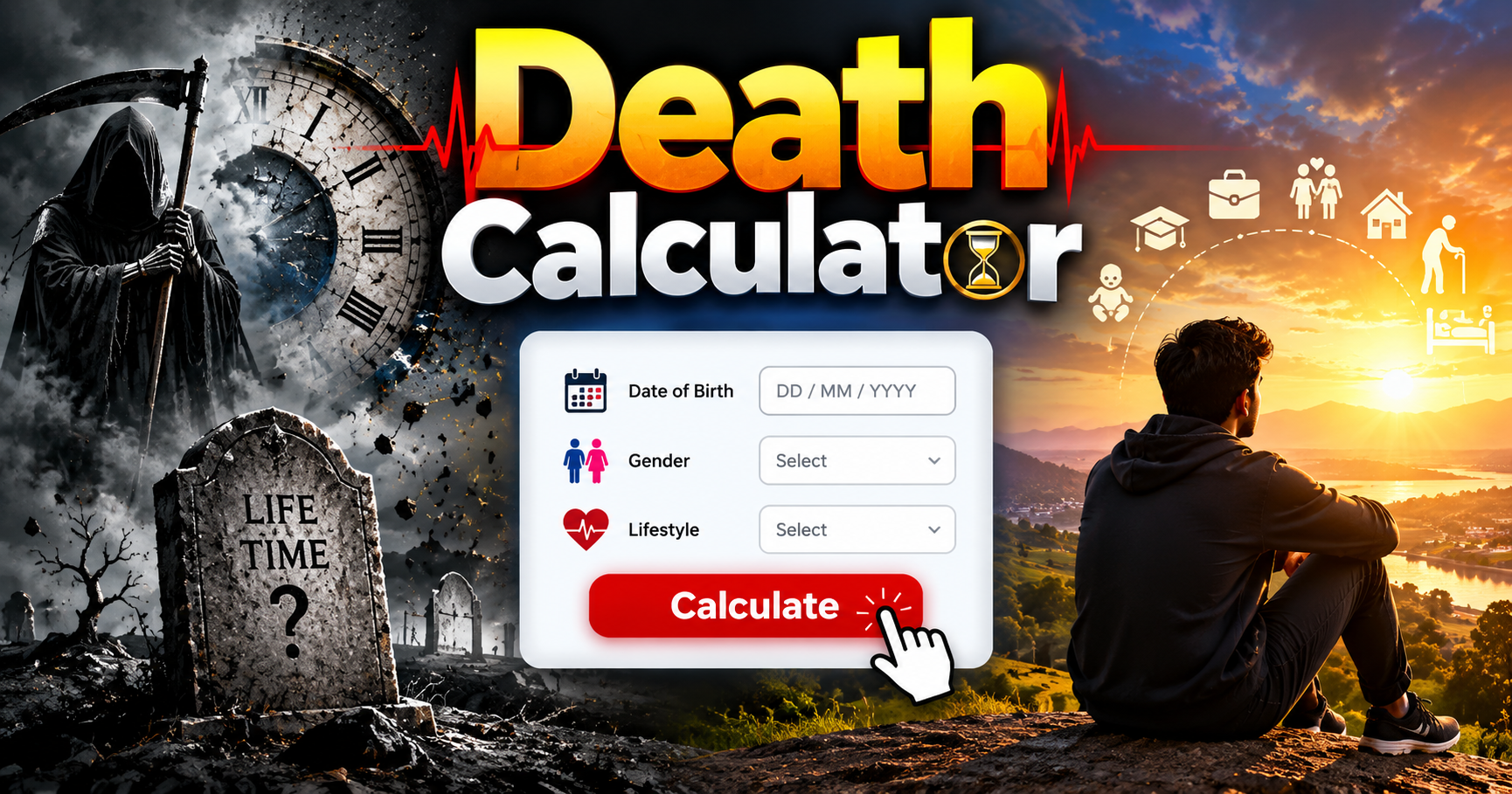
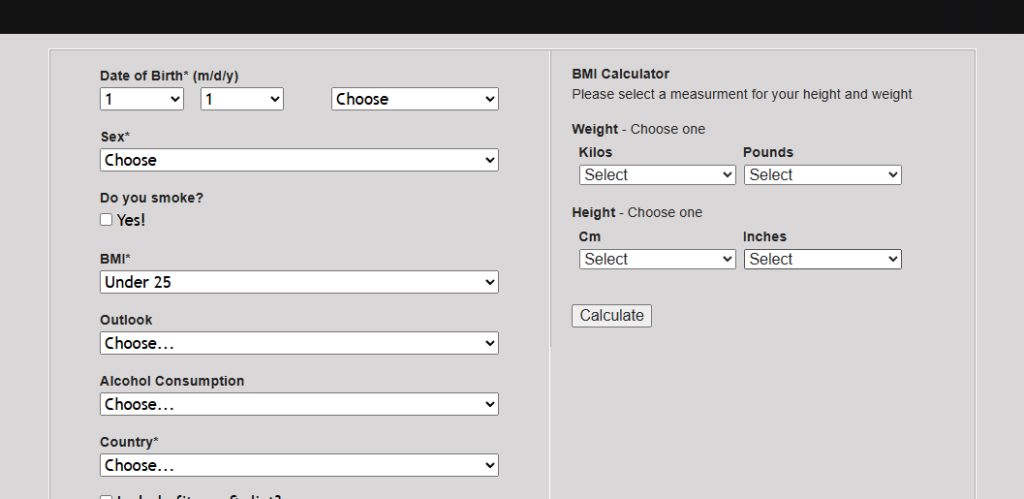
Using a Death Calculator online is usually a simple process that does not require advanced technical knowledge. First, users visit a website that provides the calculator and read the instructions displayed on the page. Depending on the tool, they may need to enter their date of birth, current age, or a hypothetical lifespan. After providing the required details, users can select the Calculate button to generate the result. The website may display a hypothetical future date, a countdown, or a general life expectancy estimate. Before using the result for any purpose, users should understand the assumptions behind the calculation and check whether the website provides clear explanations. It is also important to protect personal information when using online tools. Users should avoid entering sensitive medical details, government identification numbers, financial information, or other unnecessary personal data into unfamiliar websites.
Important Features of a Death Calculator
A well-designed Death Calculator may include several features that improve usability and help users understand the results. A date-of-birth field allows users to enter their birth date, while an age calculator can determine their current age in years, months, and days. Some websites provide a hypothetical lifespan selection so users can explore different scenarios. A countdown feature may display the time remaining until a selected date, while a results section can explain how the final calculation was produced. Mobile-friendly design is another useful feature because it allows users to access the calculator on smartphones, tablets, and desktop computers. Educational information about life expectancy can also help users understand the difference between statistical averages and individual outcomes. The most responsible calculators avoid frightening language, unsupported medical claims, and misleading promises about predicting death.
Benefits of Using a Death CalculatorA Death Calculator may offer educational and personal reflection benefits when used with realistic expectations. For example, a hypothetical countdown can encourage users to think about their priorities, personal goals, family relationships, and the activities they want to experience during their lives. Some people may use the tool as a reminder to spend more quality time with loved ones, learn new skills, or make progress toward meaningful ambitions. From an educational perspective, a calculator can demonstrate how dates, ages, time intervals, and assumed lifespans are calculated. Tools that explain population life expectancy can also introduce users to basic demographic concepts. Nevertheless, the calculator itself cannot improve health, extend lifespan, or provide a reliable prediction of future events. Its potential value comes from learning and reflection rather than the accuracy of a predicted death date.
Death Calculator and Life ExpectancyLife expectancy is a statistical measure used to describe how long people in a particular population are expected to live under specified mortality conditions. Researchers and public health organizations use life expectancy data to understand population health, compare demographic patterns, and evaluate changes in mortality over time. These statistics may vary according to geographical location, historical period, age, and other population characteristics. A Death Calculator may use life expectancy figures to generate an estimate, but an average lifespan does not determine how long a particular individual will live. Some people live significantly longer than the average, while others die earlier. Population statistics describe patterns across groups rather than fixed outcomes for individuals. Therefore, users should understand the limitations of life expectancy calculations and avoid treating a statistical estimate as a personal deadline or guaranteed future event.
Factors That Influence Human LifespanHuman lifespan is influenced by a combination of genetic, medical, environmental, social, and lifestyle factors. Genetics may affect susceptibility to certain diseases, while nutrition, physical activity, sleep quality, and tobacco use can influence long-term health. Access to healthcare, preventive screenings, vaccinations, and timely medical treatment may also affect health outcomes. Environmental conditions, occupational hazards, economic circumstances, and social support can contribute to differences in lifespan between individuals and communities. In addition, accidents, infections, and other unexpected events may change a person’s circumstances in ways that no simple calculator can anticipate. These factors often interact with one another, making individual lifespan difficult to estimate accurately. Even a calculator that collects several personal details cannot account for every possible influence or provide certainty about a person’s future.
Is a Death Calculator Accurate?The accuracy of a Death Calculator depends on the task it is designed to perform. A calculator that adds a selected number of years to a birth date can produce an accurate mathematical result if its date calculations are correct. Similarly, a countdown tool can calculate the time remaining until a specified future date. However, predicting the exact date of an individual’s death is fundamentally different from calculating a date or time interval. No ordinary online calculator can reliably determine when a particular person will die. Even statistical models used in research estimate probabilities and population patterns rather than guaranteeing individual outcomes. Users should be cautious of websites that claim to provide completely accurate death predictions, use frightening messages to attract attention, or request payments to reveal supposedly guaranteed results. A trustworthy website should explain its limitations clearly and avoid presenting hypothetical calculations as established facts.
Privacy and Safety While Using Online CalculatorsPrivacy is an important consideration when using any online calculator, particularly one that asks questions about personal characteristics or health. A basic Death Calculator usually needs only a birth date or a selected hypothetical lifespan to perform its mathematical calculation. Users should be cautious when a website requests detailed medical records, identification numbers, financial information, or other sensitive details without a clear and legitimate reason. Reading the website’s privacy policy can help users understand how submitted information may be collected, stored, or shared. It is also advisable to avoid unfamiliar websites that display threatening messages, demand unnecessary payments, or make unsupported claims about personal health and mortality. Choosing a transparent website with clear explanations and minimal data collection can reduce unnecessary privacy risks and help users make informed decisions about the information they share online.
Death Calculator for Personal ReflectionSome people use a Death Calculator as a way to reflect on the uncertainty of life and the importance of using their time meaningfully. A hypothetical countdown may encourage users to reconnect with friends and family, pursue personal interests, develop new skills, or work toward long-term goals. It can also serve as a reminder that spending time on meaningful relationships and activities may be more valuable than constantly postponing important experiences. However, these reflections do not require a calculator, and no hypothetical date should determine how a person values their life. Death-related content may also create anxiety or discomfort for some individuals. Anyone who finds the results upsetting can stop using the tool and focus on positive activities, supportive relationships, and practical steps that contribute to emotional well-being and a fulfilling daily life.
Frequently Asked Questions About Death CalculatorA common question is whether a Death Calculator can predict an exact death date. The answer is no, because an online calculator cannot reliably determine an individual’s future lifespan. Another frequently asked question concerns whether these tools are free. Many websites offer basic calculations without charge, although some may advertise paid features or other services. Users may also wonder what information is required to use the calculator. In most basic versions, a birth date or hypothetical lifespan is sufficient. Another important question is whether the result can help someone make medical decisions. A Death Calculator is not a diagnostic tool and should never replace professional healthcare advice. Users should rely on qualified medical professionals for health concerns and treat any lifespan estimate as hypothetical rather than factual.
Website Link
ConclusionA Death Calculator is an online tool that can calculate hypothetical future dates, display countdowns, or present general information about life expectancy. It may be useful for basic date calculations, educational purposes, and personal reflection when its limitations are clearly understood. However, it cannot reliably predict the exact date of an individual’s death because human lifespan depends on numerous factors and unpredictable circumstances. Users should protect their personal information, avoid websites that promise guaranteed predictions, and never base major medical, financial, or personal decisions on a hypothetical result. Instead, the tool can be viewed as an opportunity to reflect on personal goals, maintain healthy habits, strengthen relationships, and appreciate the present. Although the future cannot be calculated with certainty, people can make meaningful choices today that support a healthier and more fulfilling life.