Introduction
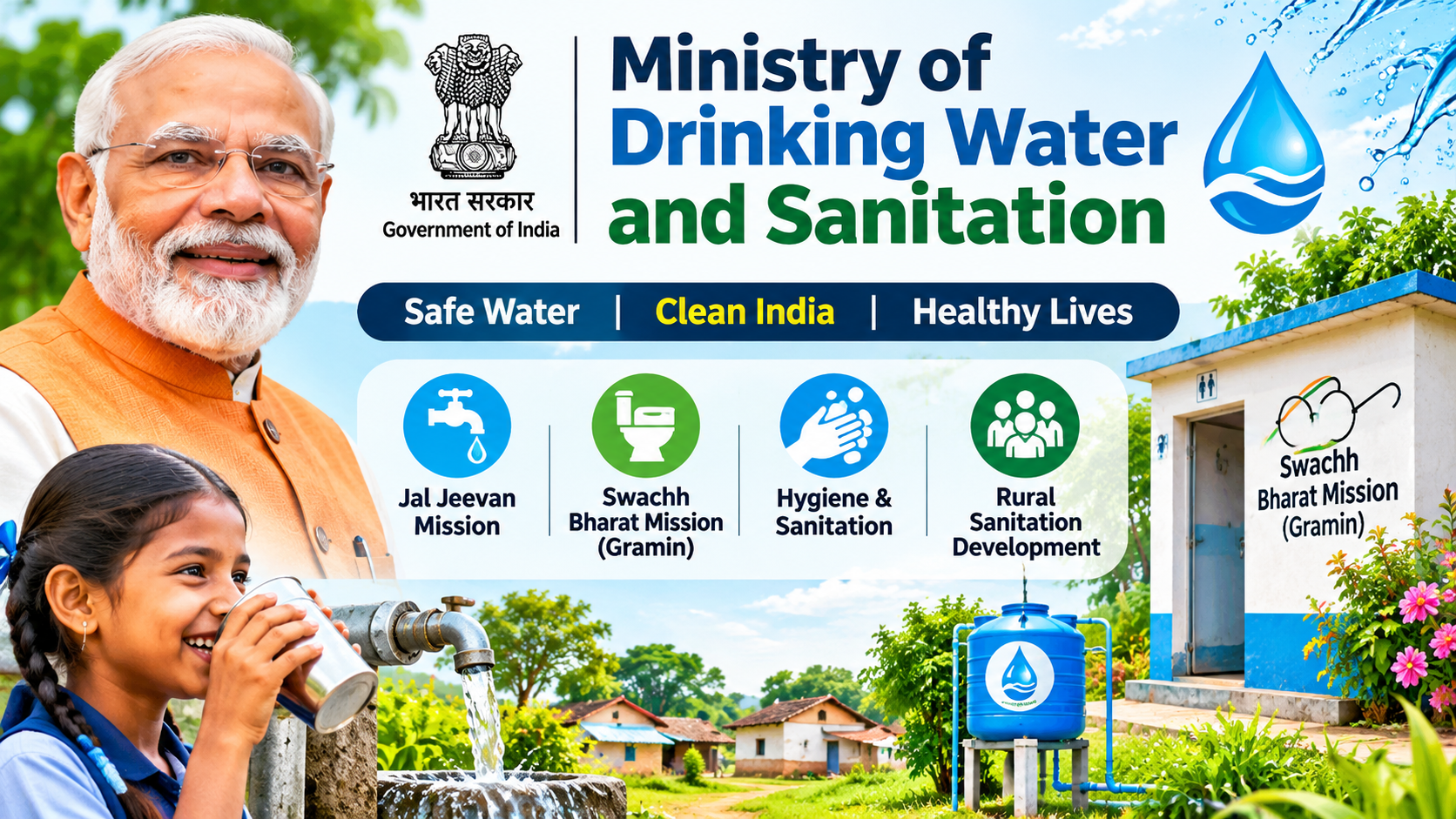
The Ministry of Drinking Water and Sanitation was an important ministry of the Government of India responsible for improving access to safe drinking water and sanitation facilities, particularly in rural areas. Its primary objective was to ensure that people living in villages and remote regions received clean drinking water and had access to proper sanitation facilities. The ministry played a significant role in improving public health, maintaining hygiene, preventing waterborne diseases, and promoting cleanliness across the country.
The ministry was established as a separate ministry on 13 July 2011. In 2019, it became the Department of Drinking Water and Sanitation under the newly formed Ministry of Jal Shakti. Its responsibilities continue through this department, which implements important national programmes related to drinking water and rural sanitation.
History of the Ministry of Drinking Water and Sanitation
The development of the Ministry of Drinking Water and Sanitation began with the Department of Drinking Water Supply, which was established under the Ministry of Rural Development in 1999. In 2010, it was renamed the Department of Drinking Water and Sanitation. Recognising the importance of clean drinking water and sanitation for rural development, the Government of India established it as an independent ministry on 13 July 2011.
Related Posts
The ministry was responsible for developing national policies, coordinating government programmes, and providing financial support to states for drinking water and sanitation projects. In May 2019, the Government of India created the Ministry of Jal Shakti by bringing together the former Ministry of Drinking Water and Sanitation and the Ministry of Water Resources, River Development and Ganga Rejuvenation. Since then, drinking water and sanitation activities have been managed by the Department of Drinking Water and Sanitation under the Ministry of Jal Shakti.
Main Objectives of the Ministry
The main objective of the ministry was to provide safe, sufficient, and accessible drinking water to rural households. It also focused on improving sanitation infrastructure, encouraging toilet usage, and creating awareness about personal hygiene and environmental cleanliness. Through various government initiatives, the ministry aimed to reduce waterborne diseases and improve the overall quality of life.
Another important objective was to encourage community participation in water management and sanitation activities. The ministry supported local bodies, village committees, and state governments in developing sustainable water supply systems. It also promoted responsible water usage, groundwater conservation, and proper maintenance of public water facilities.
Major Functions and Responsibilities
The Department of Drinking Water and Sanitation performs several important functions under the Ministry of Jal Shakti. It develops policies and guidelines for rural drinking water supply and sanitation programmes. It also coordinates with state governments and local authorities to implement national-level schemes effectively.
The department provides financial and technical assistance for rural water supply projects, monitors programme implementation, and evaluates the progress of government initiatives. It promotes safe drinking water practices, sanitation awareness, waste management, and community participation. Another important responsibility is to encourage sustainable water resources management so that rural communities can access drinking water for the long term.
Jal Jeevan Mission
Jal Jeevan Mission is one of the major government initiatives associated with rural drinking water supply. Launched in 2019, the mission aims to provide Functional Household Tap Connections to rural households, ensuring access to adequate and safe drinking water through household taps.
The programme focuses on improving water supply infrastructure, developing village-level water distribution systems, and promoting community participation. It also encourages local communities to monitor water quality and maintain water supply facilities. The mission gives importance to sustainable water sources, rainwater harvesting, groundwater recharge, and long-term water security. Through this initiative, the government aims to improve the availability of drinking water and reduce the difficulties faced by rural families in collecting water.
Swachh Bharat Mission – Gramin
Swachh Bharat Mission – Gramin was another major programme implemented by the former ministry to improve sanitation facilities in rural India. Launched on 2 October 2014, the programme aimed to eliminate open defecation and encourage people to use household and community toilets.
The mission focused on constructing individual household toilets, improving sanitation awareness, and encouraging behavioural changes among rural communities. It also promoted cleanliness in villages, proper waste disposal, and better hygiene practices. The second phase of the mission places additional emphasis on sustaining Open Defecation Free status and achieving effective solid and liquid waste management in rural areas.
Importance of Safe Drinking Water
Safe drinking water is essential for maintaining good health and preventing several diseases. Contaminated water can cause serious health problems, including diarrhoea, cholera, typhoid, and other waterborne infections. The ministry worked towards improving access to clean drinking water by supporting water supply infrastructure and encouraging regular water quality monitoring.
Providing safe drinking water also reduces the time and physical effort required for families to collect water from distant sources. It particularly benefits women, children, and elderly people living in rural communities. Reliable drinking water facilities support better education, improved health, and overall rural development.
Role in Rural Sanitation and Hygiene
Rural sanitation is an important factor in maintaining public health and environmental cleanliness. The ministry encouraged rural households to construct and use toilets while creating awareness about personal hygiene and sanitation practices. It also supported village-level sanitation activities through government programmes and community participation.
Proper sanitation helps prevent environmental pollution, reduces the spread of infectious diseases, and creates healthier living conditions. The department continues to support rural sanitation initiatives through the Swachh Bharat Mission – Gramin. It also promotes scientific waste management practices, including the treatment of wastewater and responsible disposal of household waste.
Water Quality Monitoring and Management
Maintaining drinking water quality is one of the important responsibilities associated with rural water supply programmes. Water sources may become contaminated due to chemicals, industrial waste, agricultural activities, and poor sanitation practices. Therefore, regular testing and monitoring are necessary to ensure that drinking water is safe for public consumption.
The department encourages water quality testing through laboratories and community-level monitoring initiatives. It also supports awareness programmes that educate people about water contamination, safe storage, and hygienic handling of drinking water. These activities help rural communities identify water quality problems and take appropriate measures to protect public health.
Benefits to Rural Communities
The programmes associated with the Department of Drinking Water and Sanitation provide several benefits to rural communities. Access to household tap connections improves convenience and reduces the burden of collecting water. Better sanitation facilities help families maintain hygiene and protect themselves from diseases.
These initiatives also contribute to women’s empowerment by reducing the time spent collecting water and improving household living conditions. Children benefit from healthier surroundings and better access to sanitation facilities. Overall, improved water supply and sanitation infrastructure support rural development, social welfare, and a better standard of living.
Challenges in Drinking Water and Sanitation
Despite significant progress, several challenges remain in providing safe drinking water and sanitation facilities across India. Water scarcity, groundwater depletion, seasonal droughts, water contamination, and inadequate infrastructure can affect the regular supply of drinking water. Some remote villages also face difficulties in maintaining water distribution systems.
Sanitation programmes require continuous public awareness and behavioural changes to ensure that facilities are properly used and maintained. Addressing these challenges requires cooperation between central and state governments, local authorities, technical experts, and rural communities. Sustainable planning and regular monitoring are essential for achieving long-term improvements.
Website Link
Conclusion
The Ministry of Drinking Water and Sanitation played an important role in improving rural drinking water supply and sanitation facilities in India. Through initiatives such as the National Rural Drinking Water Programme and Swachh Bharat Mission – Gramin, it contributed to public health, hygiene, and rural development. Since 2019, these responsibilities have continued under the Department of Drinking Water and Sanitation within the Ministry of Jal Shakti.
Programmes such as Jal Jeevan Mission and Swachh Bharat Mission – Gramin continue to support the government’s efforts towards clean drinking water, improved sanitation, and sustainable rural communities. Access to safe water and proper sanitation remains essential for building a healthier and cleaner India.