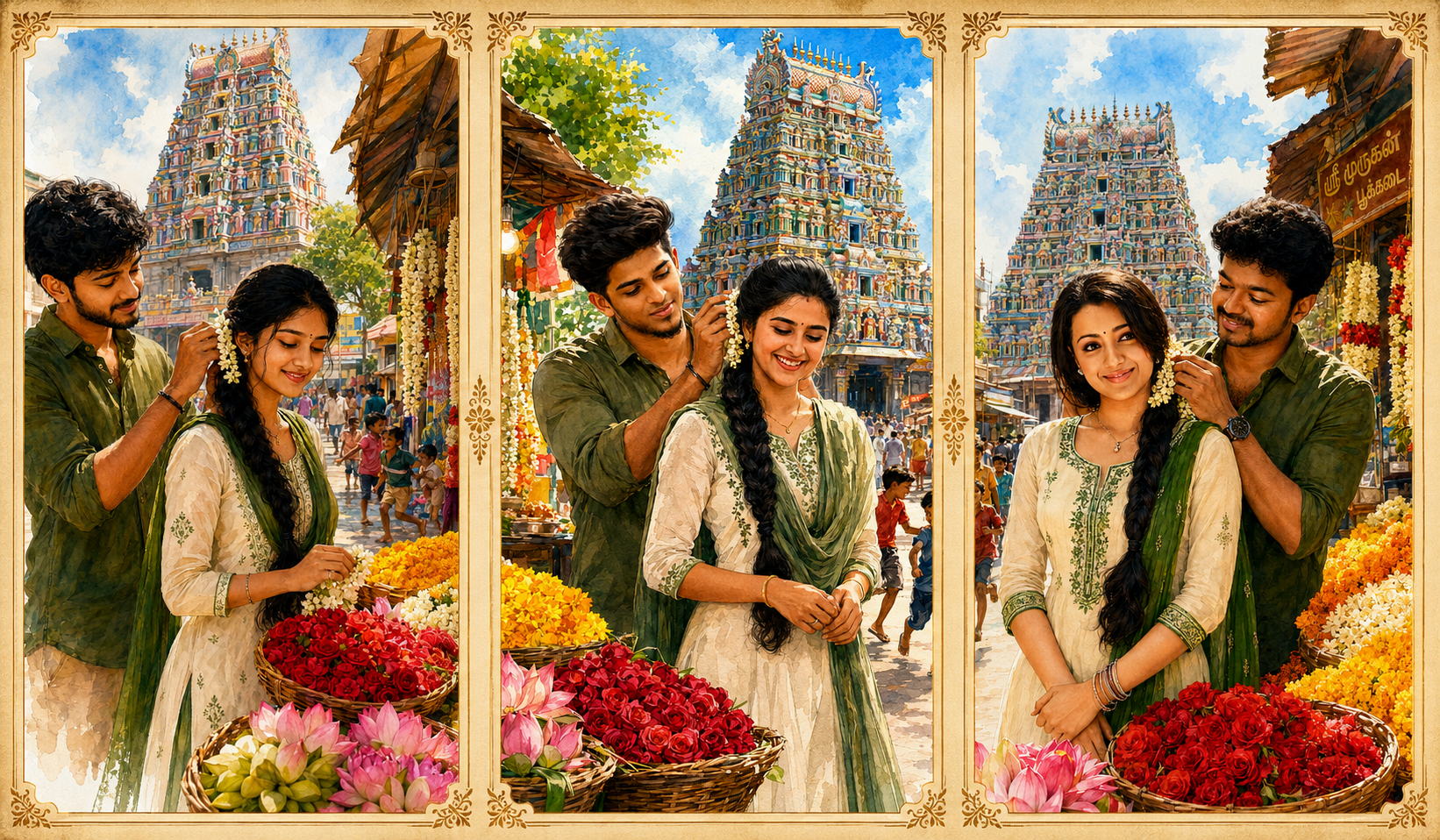
Introduction: A Moment Painted in Tradition and Affection
This image captures a deeply intimate and culturally rich moment set in the vibrant surroundings of a South Indian temple town. At its heart, it portrays a young couple sharing a tender gesture—an expression of love that is quiet, respectful, and beautifully rooted in tradition. The scene blends human emotion with architectural grandeur, floral abundance, and the everyday life of a bustling street, resulting in a composition that feels both cinematic and timeless.
The Setting: A Sacred Urban Landscape
The backdrop of the image is dominated by a towering temple gopuram, intricately adorned with colorful sculptures of deities and mythological figures. This structure is not merely architectural—it symbolizes spirituality, heritage, and the cultural heartbeat of the region.
The street below is lively and authentic. Small shops line the sides, selling flowers and traditional items. Children run joyfully in the background, adding a sense of movement and life. The sky above, painted in soft watercolor hues, lends a dreamlike quality to the entire scene, enhancing its artistic appeal.
Related Posts
The Couple: A Portrait of Gentle Romance
At the center of the composition stands a young woman, dressed in a cream-colored salwar kameez with delicate green embroidery. Her long, neatly braided hair rests over her shoulder, and her calm smile reflects contentment and grace. A small bindi on her forehead adds to her traditional elegance.
Behind her, a young man in a casual olive-green shirt gently places a string of jasmine flowers into her hair. His expression is warm and affectionate, focused entirely on her. The gesture itself is symbolic—adorning a woman’s hair with flowers is a timeless act of care and admiration in South Indian culture.
Their body language speaks volumes. There is no need for exaggerated expressions; the subtlety of their interaction conveys a deep emotional connection.
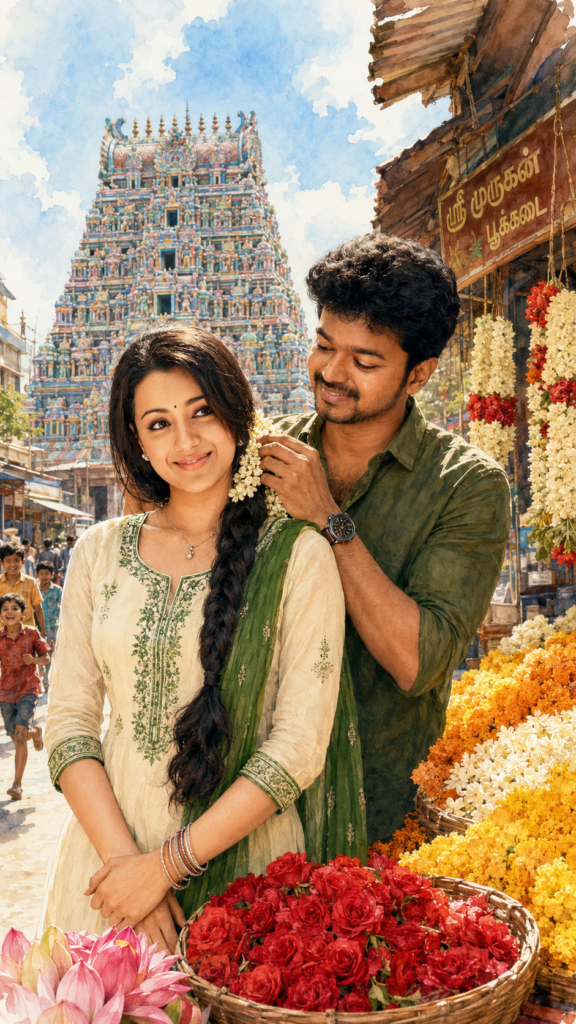
Symbolism of Flowers: Beauty, Purity, and Emotion
Flowers play a central role in this image—not just as decorative elements, but as carriers of meaning.
- Jasmine (Malli): Represents purity, love, and divine beauty. Often worn by women, it is closely tied to tradition and femininity.
- Marigold: Symbolizes auspiciousness and is commonly used in religious ceremonies.
- Roses: Associated with romance and passion, adding a layer of emotional depth to the scene.
- Lotus: Seen at the bottom of the frame, it signifies spiritual awakening and purity.
The baskets overflowing with these flowers create a vivid foreground, grounding the scene in sensory richness—one can almost smell their fragrance.
Cultural Context: Tradition Meets Everyday Life
This image is not staged in isolation; it is deeply embedded in a living culture. The Tamil signboard visible on the right hints at the local setting, likely a flower shop or marketplace. Such markets are common near temples, where devotees purchase flowers for पूजा (worship).
The act of placing flowers in a woman’s hair is not just romantic—it is cultural. It reflects respect, admiration, and a shared understanding of tradition. The couple’s attire, the environment, and even the casual presence of passersby all contribute to a narrative that feels authentic and relatable.
Artistic Style: A Fusion of Realism and Watercolor Aesthetics
The image stands out for its unique artistic treatment. While the characters and objects are rendered with high realism, the background—especially the sky—has a soft watercolor effect. This fusion creates a balance between reality and imagination.
Lighting plays a crucial role as well. The warm sunlight highlights the couple and the flowers, drawing the viewer’s attention to the central interaction. Shadows are soft, and the color palette is harmonious, dominated by earthy tones and vibrant floral hues.
Emotional Tone: Calm, Joyful, and Intimate
Unlike dramatic romantic scenes, this image thrives on subtlety. The emotions are शांत (calm) and genuine. The woman’s slight smile and the man’s focused gaze create a moment that feels निजी (personal) and heartfelt.
The surrounding activity does not distract but rather enhances the intimacy—suggesting that love exists quietly even in the midst of a busy world.
Detailed Elements Breakdown
| Element | Description | Symbolic Meaning |
|---|---|---|
| Temple Gopuram | Tall, colorful, intricately carved structure in the background | Spirituality, heritage, divine presence |
| Female Attire | Cream salwar kameez with green embroidery | Elegance, tradition, simplicity |
| Male Attire | Olive-green casual shirt | Modern yet grounded personality |
| Jasmine Garland | Being placed in the woman’s hair | Love, purity, affection |
| Flower Baskets | Filled with roses, marigolds, and lotus | Abundance, celebration, cultural richness |
| Street Scene | Children playing, shops, people walking | Everyday life, community, vibrancy |
| Tamil Signboard | Local language signage | Regional identity, authenticity |
| Lighting & Colors | Warm tones with soft watercolor sky | Dreamlike atmosphere, emotional warmth |
Narrative Interpretation: A Story Within a Frame
This image tells a story without words. Perhaps the couple is visiting the temple together, a routine that has become special because they share it. Maybe the man bought the jasmine garland from the nearby shop and chose this moment to place it in her hair—not as a grand gesture, but as a simple act of love.
The children in the background might represent innocence and the continuity of life, while the temple stands as a silent witness to countless such moments over generations.
Prompt:
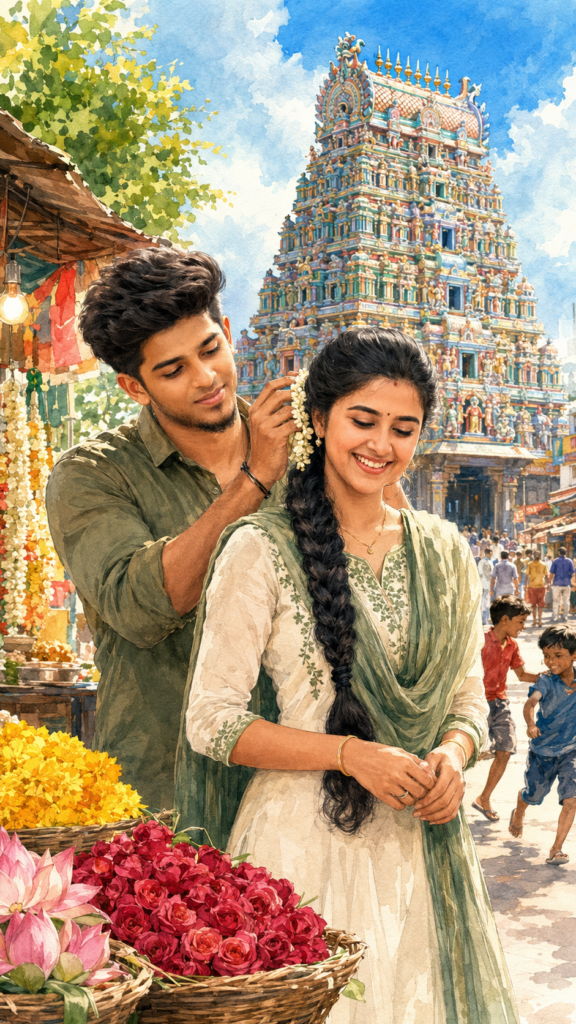
Create a soft, romantic watercolor-style portrait aesthetic illustration of a romantic couple outside a traditional South Indian temple. A handsome Tamil man with a neat beard and hairstyle, wearing a casual olive green shirt, gently places a string of fresh white jasmine flowers (gajra) into the hair of a beautiful Tamil woman. The woman has long, braided black hair, a small bindi on her forehead, and a radiant smile, dressed in an elegant off-white and green salwar kameez. They are standing next to a vibrant roadside flower stall filled with baskets of bright red roses, yellow marigolds, and pink lotuses. In the immediate background, a bustling street features children playing, leading up to a massive, colorful, and intricately sculpted South Indian temple Gopuram (tower) under a bright blue sky with soft clouds. The art style is a clean, hyper-detailed digital painting with warm, cinematic lighting and rich, saturated colors, capturing a heartwarming, authentic cultural moment. 9:16 ratio
Conclusion: Where Love Meets Culture
“Blossoms of Love in a Temple Town” is more than just a visually appealing image—it is a celebration of culture, emotion, and everyday beauty. It reminds us that love does not always need grandeur; sometimes, it exists in the smallest gestures, like placing a flower in someone’s hair.
The image harmoniously blends romance with tradition, individuality with community, and realism with artistic expression. It invites the viewer to pause, observe, and appreciate the quiet poetry of life unfolding in a single frame..