Introduction: The Power of Visual Storytelling
A cinematic double-exposure poster is not just an image—it’s a layered narrative that blends identity, emotion, and environment into a single frame. Popularized in modern cinema and influenced by films like Inception and Blade Runner 2049, this artistic technique merges two or more visual elements to create a symbolic and immersive storytelling experience. The poster you’re working with represents a harmonious fusion of a human subject and a scenic world, capturing both external beauty and internal emotion.
At its core, the double-exposure effect symbolizes duality—who a person is and what they feel, reality and imagination, or past and present. This visual metaphor makes it a favorite for cinematic posters, album covers, and digital art compositions.
Subject Identity and Expression
The central subject in a cinematic double-exposure poster often acts as the emotional anchor. Typically, it features a sharply defined portrait—often of a young individual with a calm, confident expression. The subject’s face is usually in profile or slightly angled, allowing space within the silhouette for embedded imagery.
Related Posts
The expression plays a critical role. A neutral or introspective gaze suggests depth, mystery, and contemplation. The styling—such as sunglasses, facial hair, or minimalistic clothing—adds to the personality without overwhelming the composition. For example, round black sunglasses can symbolize mystery and introspection, while a clean white t-shirt may represent simplicity and universality.
This subject becomes more than a person—they become a canvas. Their identity is visually expanded through the layered imagery within them, symbolizing their inner world, memories, or dreams.
Inner Landscape: Nature Within the Human Form
One of the most striking features of double-exposure posters is the integration of a landscape within the subject’s silhouette. This could be a tropical coastline, a dense forest, a bustling cityscape, or a winding road along cliffs. The landscape is not randomly chosen—it reflects the emotional tone of the poster.
For instance, a coastal road during sunset suggests freedom, journey, and introspection. The golden hues of the sunset add warmth and nostalgia, while the ocean represents depth and infinite possibility. Palm trees swaying in the breeze introduce a sense of calm and escape.
The blending technique is crucial. The landscape should seamlessly merge with the contours of the face, maintaining visibility of both layers. This creates a surreal yet believable composition, where the viewer can simultaneously perceive the subject and the environment.
Narrative Element: Motion Within Stillness
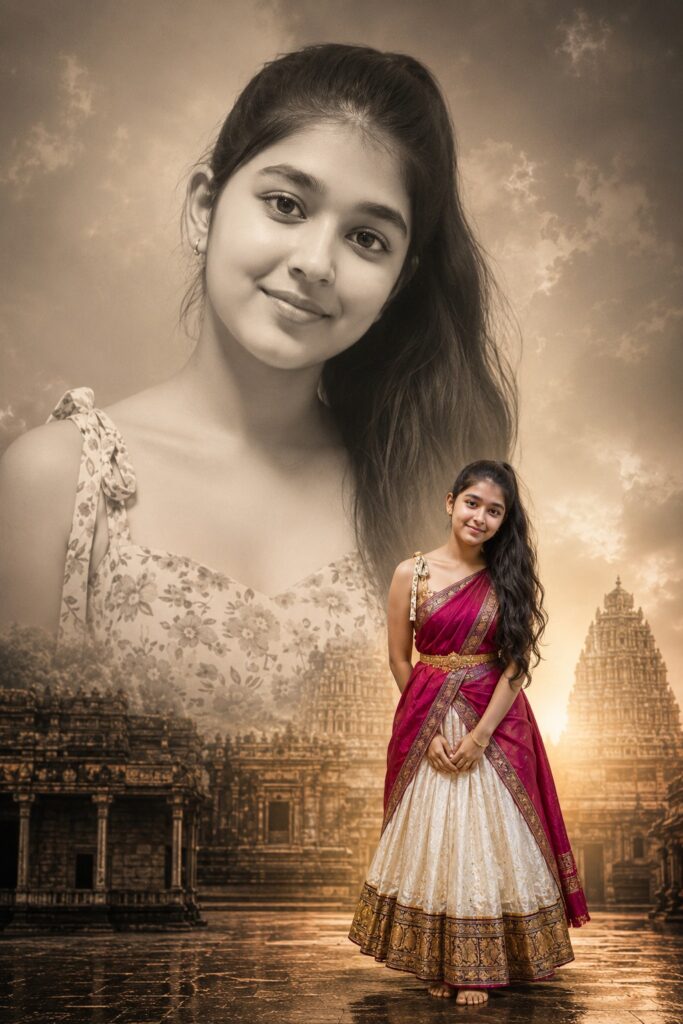
To enhance storytelling, many cinematic double-exposure posters include a smaller figure within the landscape—often a full-body version of the subject engaged in an activity like riding a motorcycle, walking, or standing on a cliff.
This miniature figure introduces motion and narrative. For example, a man riding a classic motorcycle along a winding road suggests a journey—both physical and emotional. It adds a temporal dimension to the poster, implying that the subject is not static but evolving.
This contrast between the still portrait and the dynamic inner scene creates visual tension and intrigue. It invites the viewer to ask questions: Where is he going? What does this journey mean? Is it a memory, a dream, or a metaphor?
Lighting and Color Palette
Lighting is one of the most critical components in achieving a cinematic feel. Golden hour lighting—just after sunrise or before sunset—is commonly used because of its soft, warm tones and long shadows. This type of lighting enhances skin tones and adds depth to the landscape.
The color palette is usually limited but impactful. Warm tones like orange, gold, and amber dominate, complemented by cooler shades like teal or deep blue for contrast. This balance creates visual harmony while maintaining cinematic intensity.
Color grading techniques—such as high contrast, slight desaturation, and vignette effects—are often applied to unify the composition. The goal is to make the image feel like a frame from a film rather than a standalone photograph.
Symbolism and Emotional Depth
Every element in a double-exposure poster carries symbolic weight. The subject represents identity; the landscape represents emotion or memory; the motion element represents journey or transformation.
For example:
- A road can symbolize life’s path
- The ocean can represent emotional depth
- A sunset may संकेत closure or transition
- Sunglasses can imply hidden emotions or introspection
This layered symbolism allows the poster to communicate complex ideas without words. It becomes a visual poem—open to interpretation but grounded in emotional truth.
Composition Techniques and Design Principles
Creating a compelling double-exposure poster requires careful attention to composition. Key principles include:
- Balance: The subject and embedded imagery must be proportionally aligned
- Contrast: Light and dark areas should guide the viewer’s eye
- Focus: The subject’s face should remain the focal point
- Layering: Smooth blending of images to avoid harsh edges
- Negative Space: Strategic use of empty areas to enhance clarity
Design tools like Adobe Photoshop are commonly used, employing layer masks, blending modes, and gradient overlays to achieve the desired effect.
Summary Table: Key Elements of a Cinematic Double-Exposure Poster
| Element | Description | Purpose |
|---|---|---|
| Subject Portrait | Main face or profile of the individual | Acts as emotional anchor and visual focus |
| Inner Landscape | Scenic imagery داخل silhouette (e.g., beach, forest, city) | Represents inner thoughts, memories, or emotions |
| Secondary Figure | Smaller version of subject in action (e.g., riding, walking) | Adds narrative and motion |
| Lighting | Golden hour or cinematic lighting | Enhances mood and realism |
| Color Palette | Warm tones with cool contrasts | Creates visual harmony and cinematic feel |
| Blending Technique | Seamless merging of layers | Maintains realism and artistic integrity |
| Symbolism | Use of visual metaphors (road, ocean, sunset) | Adds depth and interpretive meaning |
| Composition | Balanced layout with clear focal point | Ensures visual clarity and engagement |
Prompt:

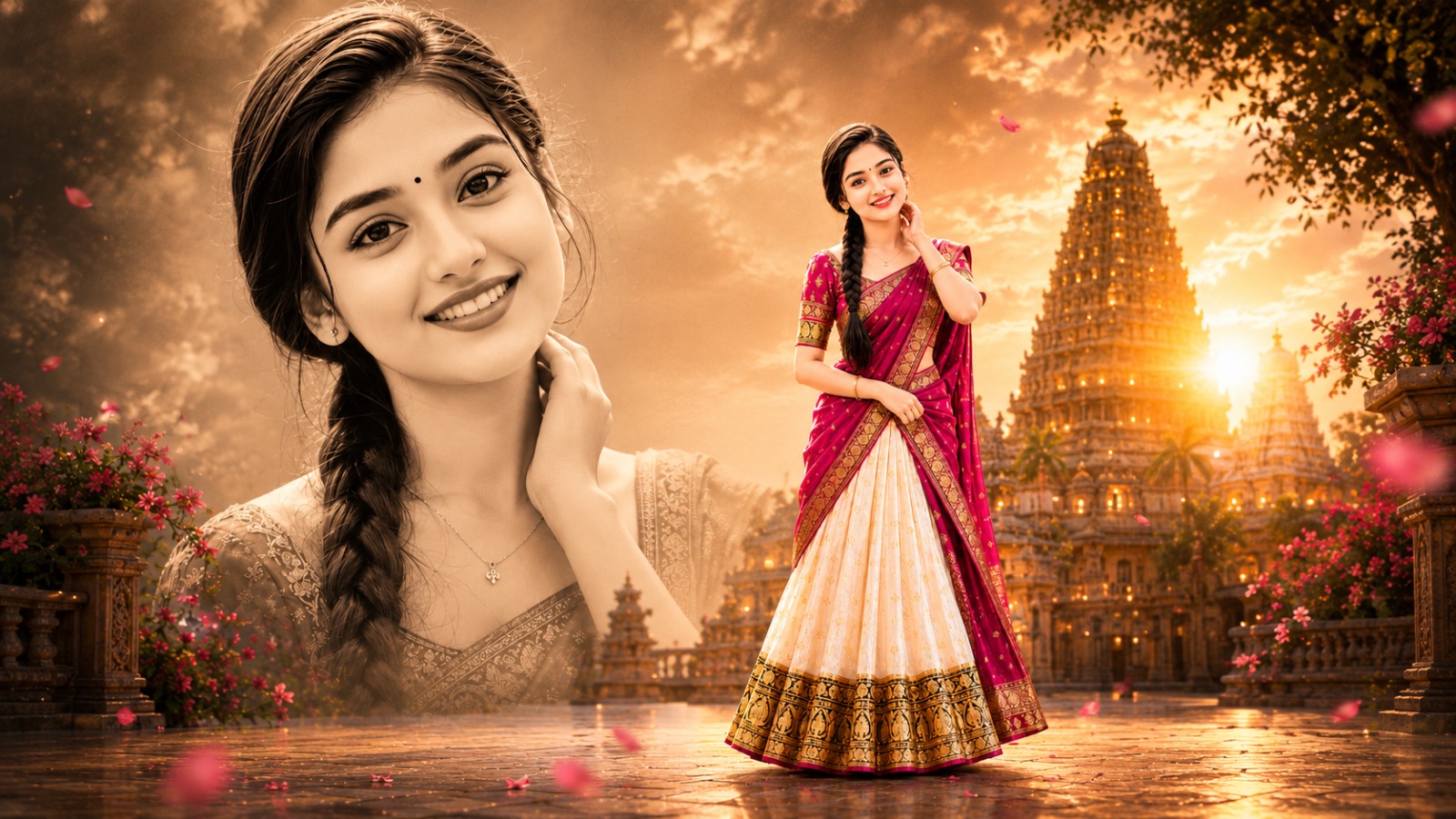
Create a Cinematic double-exposure poster of the uploaded person, identity 100% preserved, same person wearing a same monochrome large his face looking into the distance close-up portrait in background smile face, smallest full-body girl she is standing same face upload image smile face, wearing dressed in a traditional magenta and white half-saree; a magenta pleated ‘davani’ (drape) with traditional temple-border embroidery in gold and black is paired with a gold-embroidered border white silk
Conclusion: A Frame Beyond Reality
A cinematic double-exposure poster transcends traditional design by combining photography, storytelling, and symbolism into a single frame. It invites viewers to look beyond the surface and explore the layers भीतर—both literally and metaphorically.
By merging a human subject with a meaningful landscape and narrative elements, the poster becomes more than just visual art—it becomes a story frozen in time. Whether used for film promotion, personal branding, or creative expression, this style continues to captivate audiences with its depth, beauty, and emotional resonance.